
UNSTOPPABLE STRENGTH TEMPLATE
Build Power. Break Limits. Dominate Every Lift.
The Unstoppable Strength Template is your ultimate blueprint for building raw power and conquering plateaus. Designed for serious lifters who demand results, this program combines proven strength-building principles with cutting-edge periodization to maximize every rep, every set, and every workout.
This isn’t your average cookie-cutter plan. The Unstoppable Strength Template focuses on progressive overload, strategic volume, and optimized recovery to help you dominate the big lifts—squat, bench, deadlift, and more. With built-in deload weeks to prevent burnout and emphasize long-term gains, this template ensures you stay fresh and primed for peak performance.
Whether you’re chasing PRs on the platform or looking to take your training to the next level, Unstoppable Strength provides the structure, intensity, and results-driven strategy to forge strength that knows no limits. Get ready to break barriers and own every lift like never before.
It’s time to stop chasing strength and start building it.
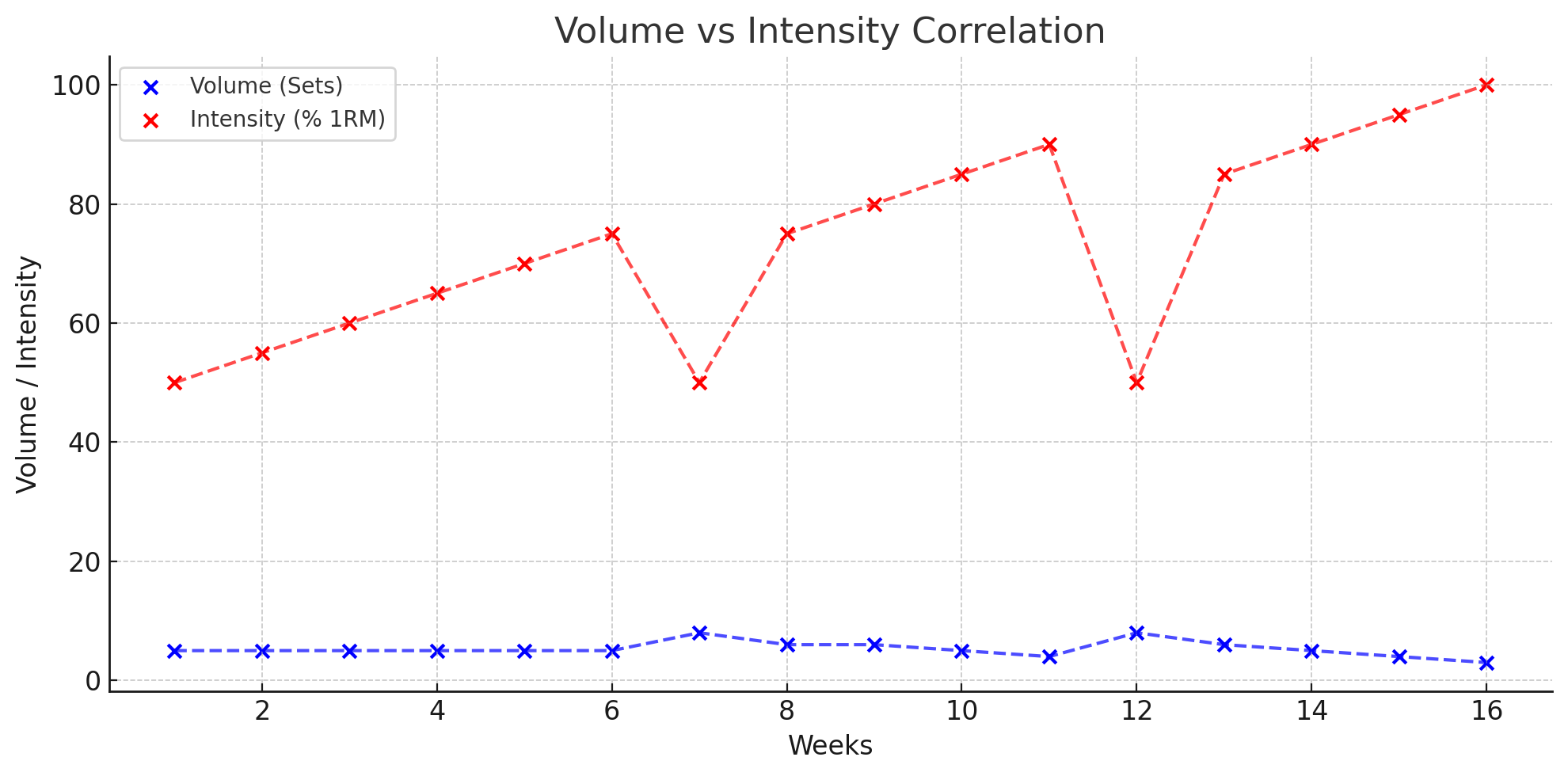
Volume vs Intensity: The Perfect Balance for Strength
Why this is important:
This chart showcases the strategic relationship between training volume (sets per exercise) and intensity (% of 1RM) across a 16-week program. As intensity climbs progressively, volume tapers off to prevent overtraining and ensure sustainable strength gains. Deload weeks provide critical recovery, marked by dips in both metrics. This visualization highlights the foundational principle of periodization, balancing workload to maximize performance and minimize fatigue.
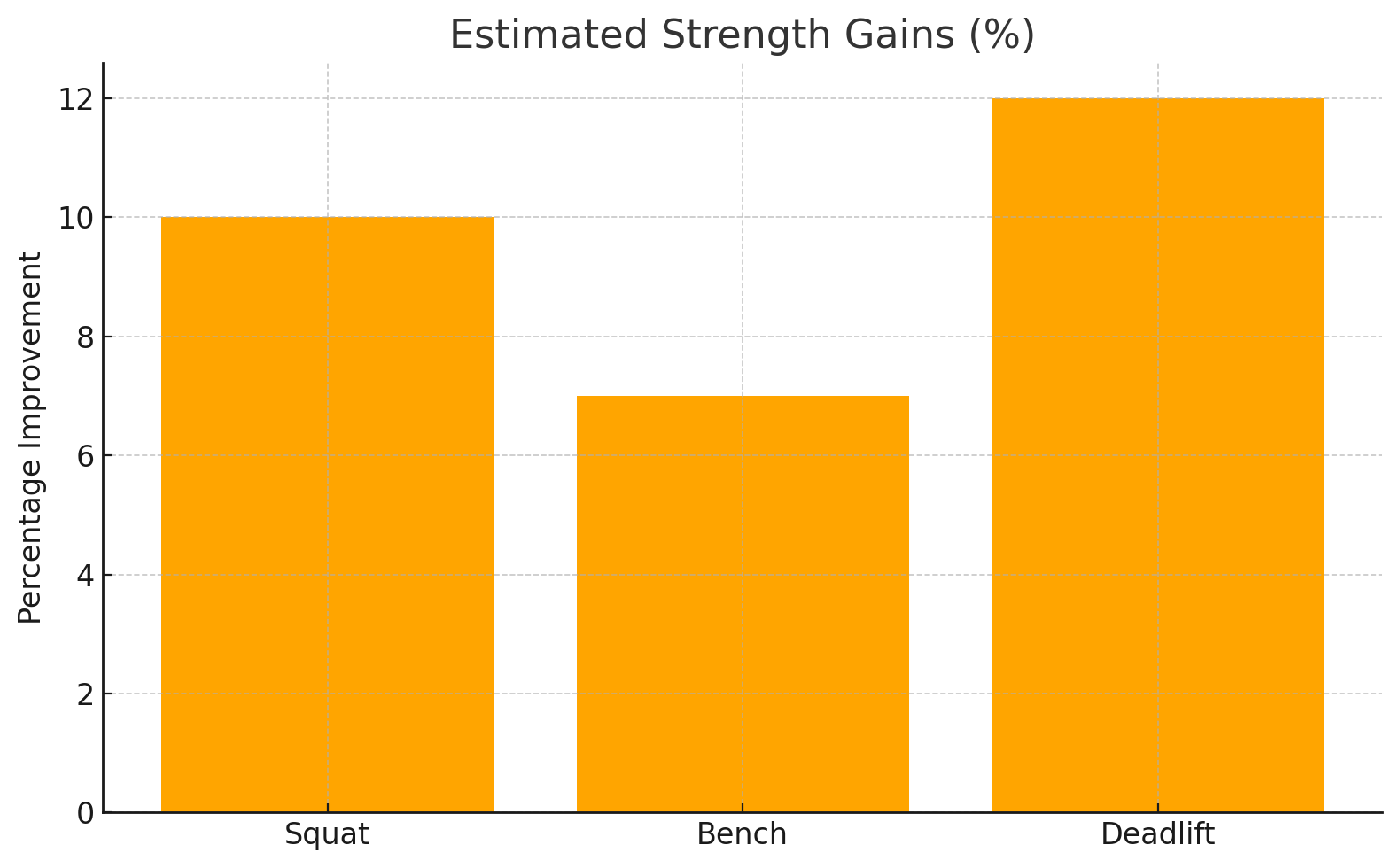
Projected Strength Gains Across Key Lifts
Why this is important:
This bar graph provides a visual estimate of potential strength improvements over the 16-week program. Lifters can expect approximately a 10% increase in squat strength, a 7% boost in the bench press, and an impressive 12% improvement in the deadlift. These gains reflect the program's emphasis on progressive overload, phase-specific training, and targeted accessory work to optimize performance in each of the core lifts.
The Unstoppable Strength Template is structured to prioritize effective, time-efficient training that gets results without unnecessary complexity. Here’s a breakdown of the key components and their scientific backing:
1. Progressive Overload
How it works: Gradually increase weight, reps, or intensity over the program to stimulate muscle and strength gains.
Why it’s effective: Research shows progressive overload is essential for continued strength adaptations (Rhea et al., 2003).
2. Phased Periodization
Structure:
Hypertrophy Phase: Higher reps (6–12) to build muscle mass.
Strength Phase: Moderate reps (4–6) with heavier weights to build strength.
Peaking Phase: Low reps (1–3) at near-maximal loads for peak performance.
Science: Periodization optimizes recovery and performance while reducing injury risks (Bompa & Haff, 2009).
3. Compound Lift Focus
Key exercises: Squat, Bench, Deadlift, Overhead Press.
Accessory work: Target weak points and imbalances.
Science: Compound lifts recruit multiple muscle groups, enhancing neural efficiency and total-body strength (Behm & Sale, 1993).
4. Built-In Deloads
Frequency: Every 6 weeks, training intensity drops to allow recovery.
Why it’s crucial: Prevents overtraining and helps maintain long-term progress (Zatsiorsky & Kraemer, 2006).
5. Optimized Rest Periods
Structure:
Hypertrophy: 60–90 seconds.
Strength: 2–5 minutes.
Science: Tailored rest intervals maximize both hypertrophy and strength gains (Haff & Triplett, 2016).
6. Auto-Regulation
How it’s applied: Adjust daily training intensity based on your readiness using RPE (Rate of Perceived Exertion).
Science: Helps prevent overreaching and aligns intensity with daily capacity (Helms et al., 2017).
7. Recovery and Mobility
Components: Dynamic warm-ups, band mobility work, and cooldowns to improve range of motion and prevent injuries.
Science: Mobility work improves movement quality and reduces injury risk (Behm et al., 2011).
8. Weak Point Training
Focus: Exercises like pause squats, deficit deadlifts, and tempo bench presses to address sticking points.
Science: Specific work on weak areas leads to faster strength gains (Swinton et al., 2012).
Ready to dominate every lift and shatter your limits? Start your journey to Unstoppable Strength today!
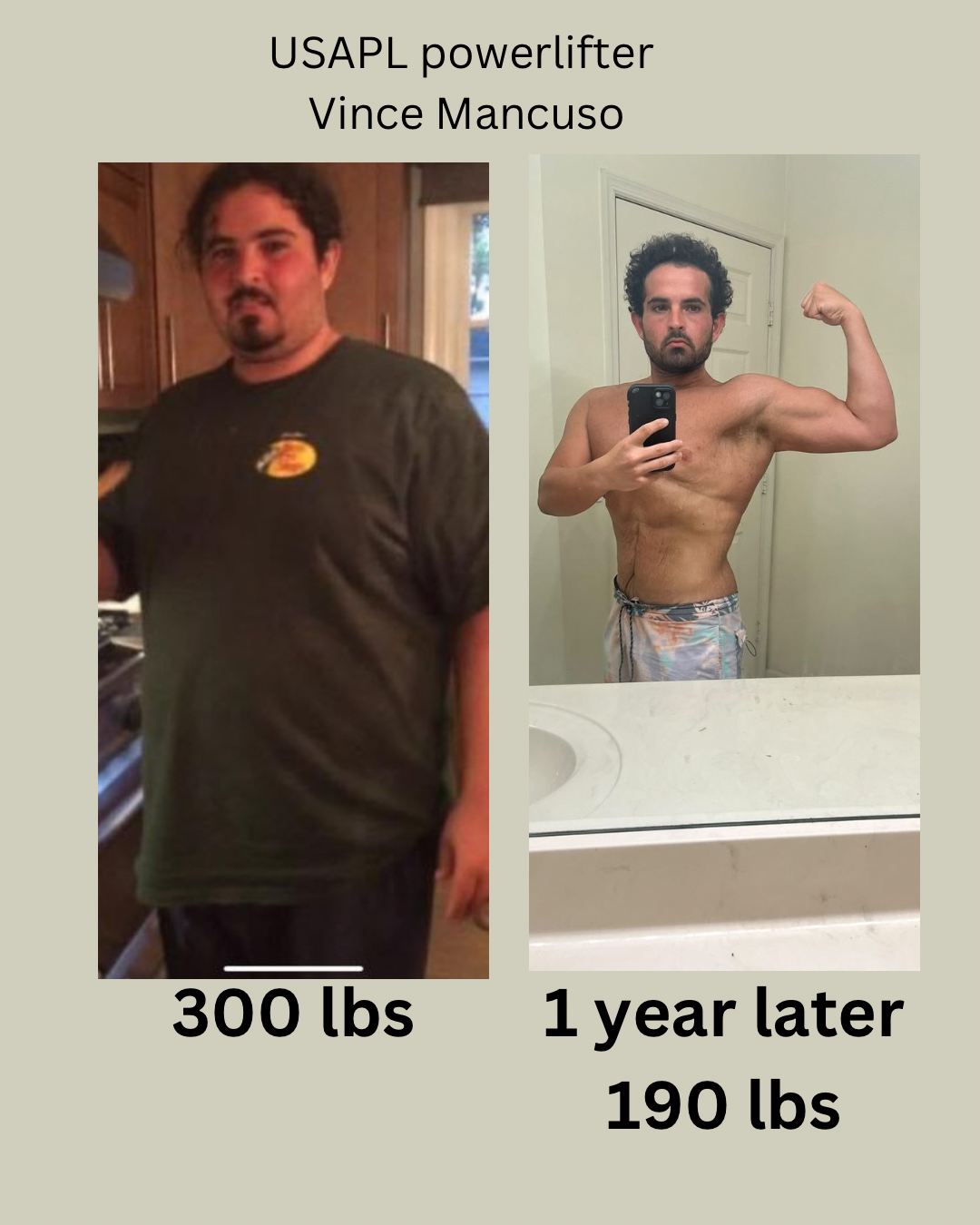
“ Lost 80 pounds working with Chris and I am now entering my third powerlifting competition this October hoping to total 1400 pounds.
He is very professional and well educated on diet and programming. I wouldn’t be where I am today without him.”